

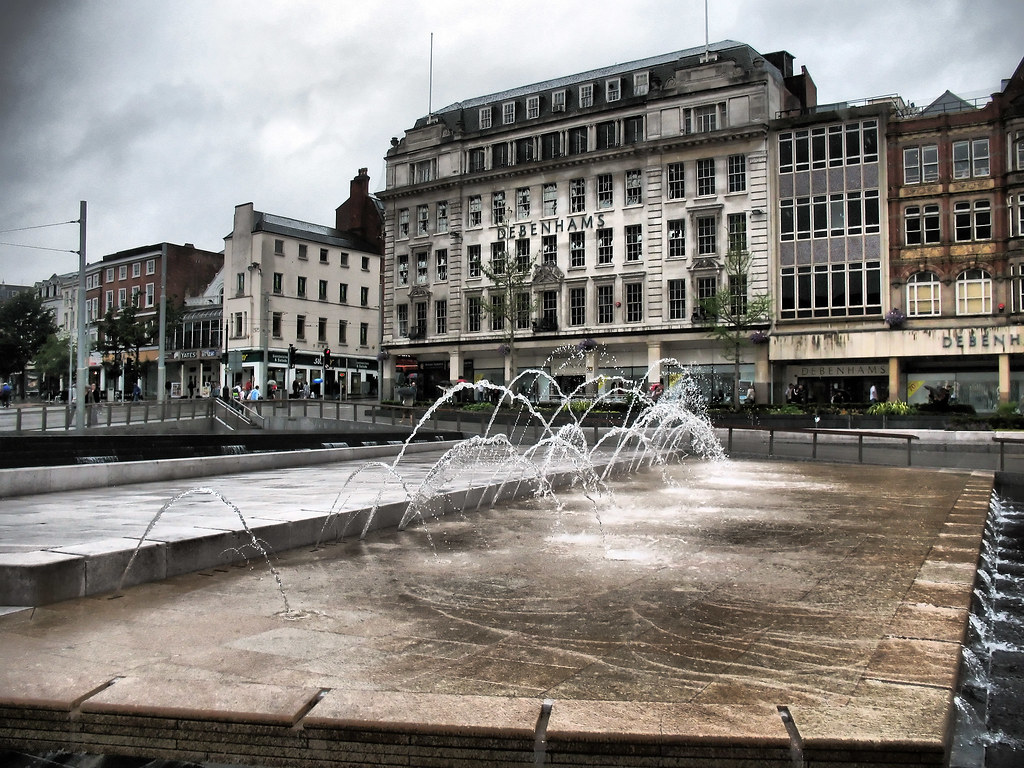
In June 2022 the fountains in Nottingham’s Old Market Square were turned off after water was discovered leaking into an electrical control area below the mechanism. The water features were a draw for children and their families during hot weather, with youngsters playing in the pools and beneath the jets as shoppers trundled past. In December 2023, and with Nottingham City Council having effectively declared bankruptcy, the local authority confirmed that the features would be switched off permanently in an effort to save £30,000 per year. When I went to the city last year this was indeed the case; Nottingham Council House looked on sternly as the attractive stonework stayed bone-dry. The early morning square was desolate save for pigeons and shop workers walking to their places of employment.
Financial issues affecting town and city centre aesthetics is not unique to Nottingham. In July 2024 the Glasgow Chamber of Commerce said that the city centre was in need of ‘fresh life’, whilst Birmingham City Council’s bankruptcy has resulted in dirtier streets and threats to cultural heritage in England’s second city. In straightened financial times it is easy to understand why local authorities choose to cut seemingly frivolous spending first; after all, shouldn’t we prioritise services like social care and education over the maintenance of water features or ensuring that the facades of historic buildings are scrubbed clean?
There certainly seems to be an ill-considered obsession with reinventing urban spaces. Prospective local representatives regularly tout their plans to revitalise ailing areas when seeking election, whilst in 2012 retail and television personality Mary Portas ran a pilot whereby twelve towns were given a share of £1million in order to prompt revitalisation. Well-meaning bluster and pilots notwithstanding, it did not seem to occur to protagonists that urban centres had not become deserted despite shoppers, but rather because consumers had chosen to change the way they bought items, whether that be via out-of-town shopping centres or by having items dropped at their doors by the all-too-convenient Amazon Prime van.
The idea of an afternoon spent in a town centre certainly fills many with a sense of ennui; after all, what is there about the experience to recommend it? A journey filled with traffic lights, roadworks, and poorly-signed bus lanes? The soulless experience of using an ill-lit stairway in a damp, echoing multistorey car park? The trawl past empty store fronts and vape shops to your destination, only to find that you could have got the same item cheaper online and delivered to your front door into the bargain? Surely our focus upon experience and wellbeing means that the days of the Shopping Trip™ are over; we can remain in our homes and browse a larger range of items at lower prices, all without so much as changing out of our pyjamas.
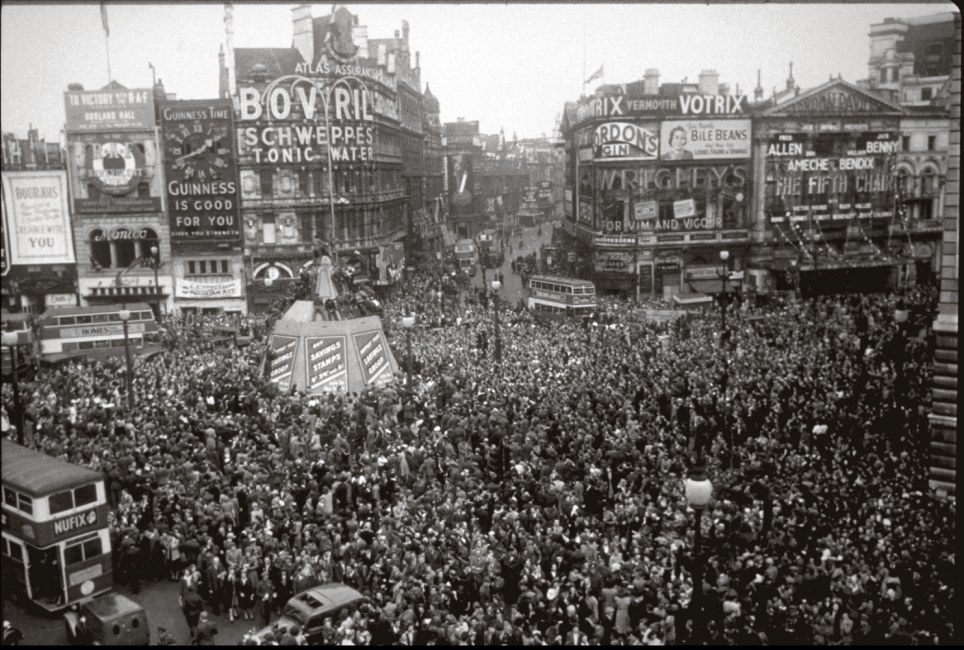
And yet, as the outrage over the fountain switch-off, the local politicians’ earnest promises, and Mrs. Portas’ focus suggest, these spaces have a peculiar place in our collective zeitgeist, a grasp which has held firm through decades of boom and bust. When we picture the VE-day celebrations in 1945, it is most likely the scenes in Picadilly Circus, London that are brought to mind; people stood atop buses and servicemen kissed women whilst the crowd seemed so large that it ebbed and flowed as a single entity, spilling over into side streets as far as the eye could see. In the UK’s biggest ever demonstration in 2003, up to two million people marched through central London before gathering in Hyde Park to protest about the UK’s involvement in the Iraq war. The ‘Reclaim the Night’ movement, demanding that women be able to walk safely in public spaces in the hours of darkness, has organised marches in city centres since the 1970s. These spaces continue to be the platforms upon which we respond to events which are bigger than any one of us. They are where we come to communicate in as ostentatious and passionate a manner as possible.
We are drawn to open, urban spaces. It seems to have become an annual occurrence that when a football team wins the Scottish Premier League, fans will congregate in their thousands at Glasgow Cross. Meanwhile, every year in every conurbation people gather to see the Christmas lights being turned on by a low-grade celebrity and to greet Santa Claus as he is driven around. Even in my own town of Stewarton, a torchlight parade is held every New Year. Is it held in a convenient car park or on a piece of farmland? Of course not. The town centre is closed off as a pipe band marches between the throngs of people standing on pavements; it is Stewarton Torchlight Parade and as such must occupy the space most closely associated with the East Ayrshire town. In these modern days of supposed excess tablet time and social media addiction, town and city centres are often where we go for an experience which is genuinely shared.
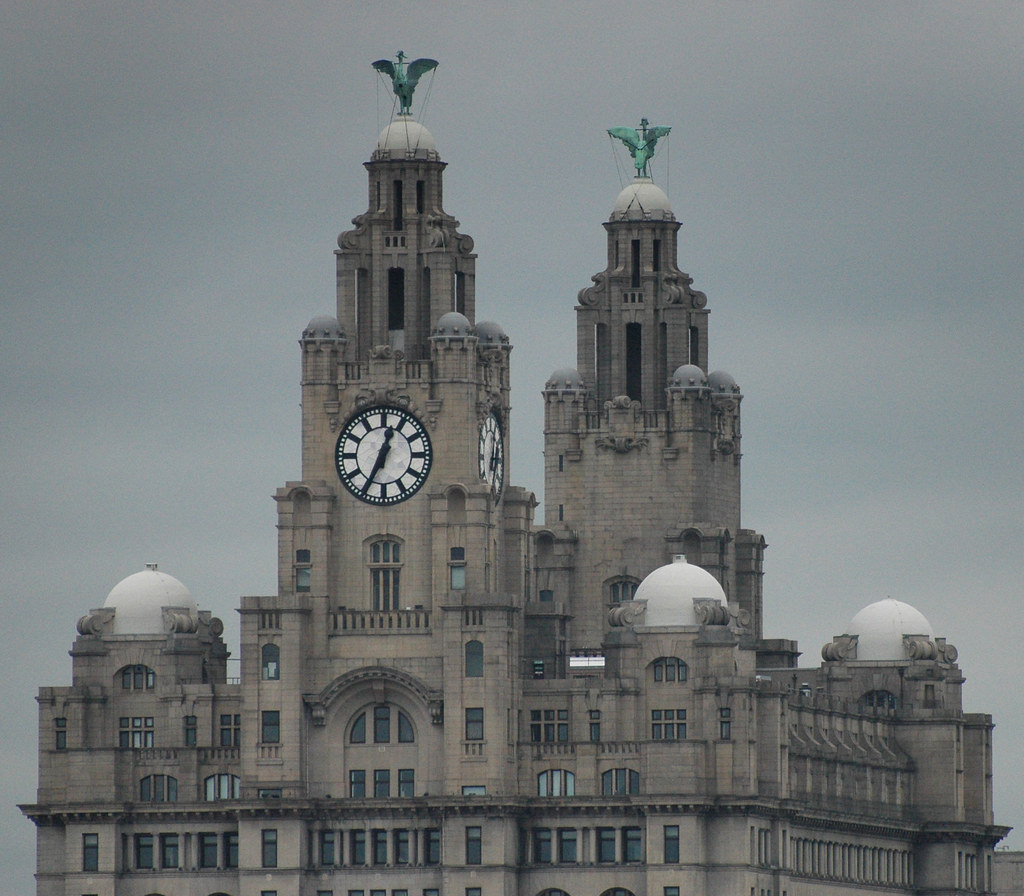
The author Will Self, teacher of psychogeography at Brunel University, describes in a 2016 lecture the power of parallax in the way we navigate. He uses the example of the huge Royal Liver building in Liverpool, atop which sit two liver birds. Depending on where a person is in the city the birds will appear differently in relation to one another, thus giving geographically-befuddled tourists a sense of direction. Might it be that public spaces provide us with a similar sense of psychological parallax in increasingly fragmented and isolated lives? Might spaces like Nottingham’s Old Market Square or Stewarton’s cross provide the mooring ropes by which we find each other once more?
That we gather in these spaces in times of triumph, protest, anger, and jubilation means that, consciously and subconsciously, we still organise ourselves as cities, towns, and villages. As tribes. These are the places where we come together to group ourselves and to develop a shared response to events. It is an intangible function and this intangibility is perhaps why the maintenance of public spaces is one of the easiest things to cut from a struggling local authority’s budget. It would be a brave politician who said that they were cutting funding for local schools or care homes so that they could keep some pretty water features running, after all.
We should not however abandon our town and city centres, despite their fading glamour and the logistical hassle that goes along with making our way into urban hubs. Promises made as part of electoral campaigns and paltry sums allocated to television personalities are not the solution to a malaise that has to some extent touched every town and city in the UK, but neither are they the cause of it. Such initiatives speak to an assumption that plazas, gardens, and squares can provide platforms for our lives. These public spaces are a shared resource; they can be accessed by rich and poor alike. Furthermore, they are how our urban centres speak on our behalf – Nottingham’s fountains and Birmingham’s Bullring Bull communicate a sense of identity to the wider world. How our urban spaces are framed provides part of a parallax illustrating a journey between past and present. They show a sense a direction for our wandering, fragmented little tribes.
Thanks for reading, folks. Pictures courtesy of Jimmedia, Zoe Clarke, Stackexchange. Recent short stories include ‘Bellahouston‘ and ‘Listen‘.
Matthew Richardson is a writer of short stories. His work has featured in Gold Dust magazine, Literally Stories, Close to the Bone, McStorytellers, Penny Shorts, Soft Cartel, Whatever Keeps the Lights On, Flashback Fiction, Cafelit, Best MicroFiction 2021, Writer’s Egg, Idle Ink, The Wild Word, Down in the Dirt, and Shooter magazine. He has a Professional Doctorate in Education. Matthew blogs at www.matthewjrichardson.com.
 Matthew Richardson
I hadn’t really thought about all those things. I guess I have moved so far from the UK – it’s now almost 14 years, so most things must have changed anyway. But nevertheless, that was interesting. Thanks for that, Matthew.
PS Bella and Bertie will be fine, I’m sure.
LikeLiked by 1 person
They will, Chris, and still faithfully helping people triangulate their positions!
LikeLiked by 1 person
Anyone brought up in a suburb will surely have the feeling that they need to set off for a brisk walk, get on a bus or in their car to go ‘into town’ at regular intervals, whether for shopping, cinema, museum or to meet up centrally with their ‘group’. The thought of never moving from one’s immediate environment is alien, except during a pandemic. I faithfully support any shop hanging on in our three towns, coffee shops pop up and down, but shops usually just close.
LikeLiked by 1 person
I think you’re right – there’s a need to reconnect regularly, even for introverts.
LikeLiked by 1 person
I grew up in a small farming town of about 800 people, was gone for ten years and came back. I’ve lived here the second time for over 20 years, and there are now just under 700 people. Most of my life I’ve had to go to “town” to do or get most things, and this is 40 km away.
Yet many of the shops I remember from my childhood are gone. Like you said, we have Amazon now, and just about anything one wants can be ordered online and delivered to your doorstep.
The fracturing of our societies is a hard thing to accept.
LikeLiked by 1 person
You’re describing so well a phenomenon that appears to be far-reaching. In the US, our Surgeon General published a study that detailed the loneliness that has reached epidemic proportions and endangers physical and mental health as well as society itself. (The study appeared in the very recent “before time,” when serious people held such positions.)
Those welcoming public spaces are essential—and resources must be found to maintain them.
LikeLiked by 1 person
You’re right, and one can only wonder at what smartphone ‘natives’ will experience as they get older as well. Definitely a place for those welcoming public spaces.
LikeLiked by 1 person
it’s terrible when a city goes ‘broke’; how such things happen, how did it ever get so bad? I have never heard of this happening in an Australian city. Hopefully you’ll have a renewal of Hope when funds pour in but from where ?
LikeLiked by 1 person
That’s the question. Birmingham in particular has finances which are so far gone…
LikeLiked by 1 person
I did not know such things could happen in modern cities; I’m obviously out of the loop —
LikeLiked by 1 person