Book Review – A Gentleman in Moscow

A Gentleman in Moscow

Amor Towles

London, Windmill Books

£8.99

A gentleman in moscow


‘Who would have imagined…when you were sentenced to life in the Metropol all those years ago, that you had just become the luckiest man in all of Russia.’


In A Gentleman in Moscow, Amor Towles takes on a gargantuan task. The culture of Soviet-era Russia might not appear at first glance to be comfortable ground for a former investment professional. Towles, though, has an instinctive understanding of what western readers find interesting about the era and is not afraid of using footnotes to expand upon history. What results is the impression that Towles is genuinely fascinated with the evolution of the Soviet Union, a passion that quickly transfers to the reader.

The eponymous gentleman, Count Alexander Ilyich Rostov, is not immediately apparent as a heroic protagonist. Privileged, aristocratic, and a member of what his prosecutors describe as ‘the leisure class’, Rostov is sentenced to indefinite house arrest at the Metropol Hotel in Moscow by a Bolshevik tribunal in 1922. As he comes to terms with his confinement, Rostov finds comfort in routine, however mundane. Dining at the same restaurant, keeping the same appointment at the barbers, and rearranging his modest apartment allow the count a semblance of order whilst endearing him to the reader.

In what might seem limiting scaffolding for a story encompassing thirty-two years, Towles progresses his narrative through exquisitely drawn secondary characters, from the forthright child Nina, to the irascible chef Emile. Typically for a hotel, some characters linger throughout the book, whilst others, seemingly integral to the plot, disappear heartbreakingly without trace.

Towles treats the major historical events of the novel with similar disparity. The second world war itself, an obvious set piece, slides by with hardly a mention, whilst the gulag is evoked in all its industrial cruelty and horror. It is in this flux that Towles brings his third novel to life. History leaves its mark on the Metropol, its staff, and its guests. Rostov, though, remains serene. It is only when the Soviet Union threatens someone whom he has grown to love that the Count seeks to change his fate rather than console himself to it.

On spec, A Gentleman in Moscow has the potential to be mawkish. It is no such thing. Towles’ lightness of touch makes the novel warm and rewarding, its characters complex and contrasting.


Taken for a Spin

Taken for a Spin

Matthew Richardson

Taken for a Spin

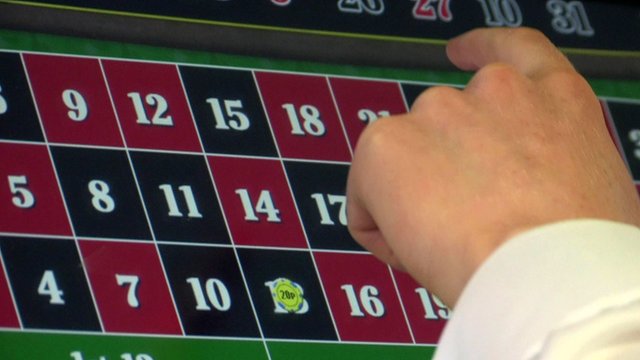
Accusatory fingers pointed at him from all over the screen. Finger marks to be precise – the smudged signs of hope and despair and salt-and-vinegar grease. The marks drew a map for whoever came to the terminal after him; the leavings of a cartographer desperate to show his bad luck. There were sweaty streaks over red, black, odds, evens, bet, double bet, and add credit. Precious few over cash out though. Not yet anyway.

Spin again.

Oliver tapped and watched as the roulette wheel began spinning, the silvery ball spiralling its way towards black and red stripes. A stream of cold air and a phlegmy sniff told him that someone else had entered the bookies. He could see in the reflection on the screen that it was Gary, in for the horses at four-ten. Oliver pulled his thick jacket around him, hoping that Gary wouldn’t clock him yet. Not that he didn’t like the guy, but he did bloody talk and Oliver needed to at least break even for today.

Spin again.

Thank God. The wet weather outside had resulted in Gary going for a sneaky smoke in the gents before the race started. With any luck Oliver would get a break and be out in ten. He would have to power-walk home; at least he would be warm. He had been sat in front of the machine so long that he felt frozen to the metal stool. His hands were like blocks of ice –the touchscreens didn’t work with gloves. In went the debit card. One last go before heading home.

Spin again.

Oliver hadn’t looked at his watch for a while, nervous at what he might see. Evens, reds. They hadn’t come up for eight spins now. Surely by the law of averages they were due. Surely. If he could just go in a hundred of so down, he could explain it to the wife. The phone went off in his pocket. It was Sheila.

“Hi darlin’…yeah just dropped by the bookies to put a line on…yep, I’ve literally just walked in…”

Spin again.

It was saving the best for last.

Damn. Gary had just come out of the bogs and spied him. Over he came, skipping like a scratched record. This time for sure, though. There was no way, simply no way, that this could not land. Not if the God-forsaken thing wasn’t rigged anyway. Sheila was still wittering away in his ear. He put the mobile down at the side of the terminal.

“Olly!” came the raucous greeting from Gary, bringing with it a slap to the back for Oliver. “Long time no see mate! Got a lighter? Mine’s gubbed. You still stuck on these, mate? It’s a mugs game, ain’t it?”

“Just give me a moment, Gary,” he answered tightly, eyes still fixed on the screen. “Last spin”.

His fingers reached for the screen again. Keep the faith. Evens, red. Sheila’s voice still issued from the phone on the machine, whiny and insistent. One more spin, money back, home, see the kids. That was the plan.

“Horses mate, that’s the way you wanna go. Head home with some dough to feed the weans,” laughed Gary, giving Oliver one more slap on the back and knocking his fingers across the screen where they struck black. Gary gave a sheepish grin. “Oops, sorry mate! Hope I brought you a bit of luck!”

Oliver half-turned to swear at the man, his face beetroot and swollen with rage. He turned back, though. The wheel was spinning, the ball circling, picking out its victim. It hopped onto the wheel like a child onto a merry-go-round, full of carefree abandon.

Red

Black

Red

Black

Red

Black

Red

Black

Red

He closed his eyes and pinched the bridge of his nose. From beside him came, insistent, the tinny voice of his wife.

“Olly? Oliver? You still there? Oliver?”

He opened his eyes once more and looked at the balance at the bottom of the screen. A big fat zero, round and pulsing.

Swinging off the seat and grabbing the mobile, he flung it as hard as he could towards Gary, who was now engrossed in the racing. Sheila’s voice whined through the air as she spun, falling silent as she hit the bank of televisions.

“Oi! What was that for?” came the reply.

Oliver’s fingers were still like chilled bars of steel as he curled them into fists, but the boiling heat of righteous indignation rose in his stomach as he strode over to his friend.

Two Doors

Two Doors

Matthew Richardson

Garage-Door-Open-Overnight

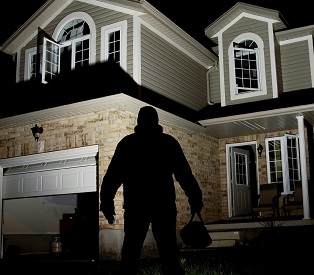
The shapes don’t make sense at first. Maybe the yellow streetlights are reflecting perversely off the garage door. Maybe it’s a shadow cast upon the white aluminium. As I walk into the driveway though, I realise that my eyes aren’t playing tricks. There is a huge bulge in the bottom half of the left door; a metallic pustule ready to burst through.

The windows in the house are dark and expressionless.

Key fob pressed, and the mechanism works. Groaning and squealing, the door raises, unpeeling with a shudder from the back end of my Audi. The vehicle is skewed across the darkened room. My eyes strain past shattered tail lights and an open car door to the garage beyond. Serrated saw blades and medieval chisels glint in the dim light, hanging from hooks and providing reference points in the shadow.

Black against grey, a man is seated in the driver’s seat of my car. He isn’t moving. Backing off, I fumble for the mobile phone in my pocket. A half-breath catches in my throat at what I see on the floor. Body parts litter the concrete. Frozen steaks, chicken wings, pork chops and even the remnants of the Christmas turkey, all scattered where the rear of the vehicle has struck the chest freezer.

The strange driver still hasn’t moved, and I shift round to look at him. Cheek bones jut out from his face, jumbled scrabble-tile teeth fill his mouth, and a dirty tracksuit hangs off him. His face rests on the steering wheel, blue powder smeared around his mouth. Cobalt bubbles pop in his spittle as he breathes gently.

He’s out for the count. I should do something; call the police, a neighbour, a family member. For some reason though, I can’t move. I can’t decide what to do first. The only thing stirring in the garage is the air freshener attached to the rear-view mirror. It swings gently, urgently.

My attention is drawn to a flashing red light on the dashboard-door open. It strikes me that it is not the driver’s car door that is open; it is the passenger’s.

The yellow streetlights seem more dirty-orange from the garage. The light doesn’t reach far.